
The National Payments Corporation of India (NPCI) stated that the Merchant Discount Rate (MDR) "is distributed only amongst the UPI ecosystem, to further invest into infrastructure resilience, innovation, cybersecurity (protecting the UPI infrastructure with banks and non-banks) and customer service."

Opposition parties, including Congress, TMC, and RJD, have strongly criticised the government's decision to impose a 0.4% Merchant Discount Rate (MDR) on UPI transactions exceeding Rs 2,000 made to merchants. They allege the move is a result of "American imperialism" and will lead to increased commodity prices, while the government maintains the charge is on merchants and not consumers, with person-to-person transactions remaining free.

Can your money be protected against online frauds like hacking, digital arrests, etc?

The Unified Payments Interface (UPI) has completed a decade since its launch, becoming the backbone of India's digital payments ecosystem. It has seen exponential growth in transaction volume and value, expanding financial inclusion and setting a global benchmark for real-time payments.

The Retailers Association of India (RAI) has voiced concerns that the government's new 0.4 per cent Merchant Discount Rate (MDR) on UPI transactions above Rs 2,000 could reverse the progress of digital payment adoption among small retailers. This fee, effective October 15, places the burden on merchants operating on thin margins, potentially pushing them back to cash transactions and undermining the government's formalisation agenda, especially ahead of the festive season.

The Indian government has introduced a 0.4% Merchant Discount Rate (MDR) on UPI person-to-merchant (P2M) transactions exceeding Rs 2,000, effective October 15. This move ends nearly six years of fully free UPI payments, though person-to-person (P2P) transfers and small P2M payments remain free. The charges aim to bolster investment in UPI infrastructure, with specific exemptions and caps for essential sectors.

India's UPI system continues its rapid growth, dominating retail payments. Recent amendments to the Payment and Settlement Systems Act allow for targeted Merchant Discount Rates (MDR) on high-value merchant transactions, aiming to create a self-sustaining revenue model for the ecosystem while keeping P2P and low-value payments free. This move could generate significant revenue and encourage ecosystem participation.

The Indian government has clarified that consumers will not be charged for UPI transactions, and most merchant transactions will also remain free. This comes amidst speculation following an amendment to the Payment and Settlement Systems Act, 2007. Any future merchant discount rate (MDR) would be nominal, threshold-based, and aimed at ensuring UPI's long-term sustainability and infrastructure development.

'UPI has been free since Covid, so why is the government charging us now?'

RBI Governor Sanjay Malhotra stated that the central bank consistently views fintechs as 'valuable partners' in shaping India's future financial system, crediting the sector with expanding financial inclusion, enhancing customer experience, and streamlining credit delivery, particularly for MSMEs.
Finance Minister Nirmala Sitharaman clarified that the Merchant Discount Rate (MDR) on digital transactions applies to merchants, not customers, and aims to support banks and fintech in infrastructure investment. She countered Congress leader Jairam Ramesh's claims, stating that a committee will decide on MDR only after Parliament passes the Taxation and Other Laws (Amendment) Bill, 2026, a process currently stalled by parliamentary disruptions.

A data breach does not end when the headlines fade. For victims, stolen personal information can fuel fraud, identity theft and financial losses for years.
RBI Governor Sanjay Malhotra stated it is "premature" to discuss the implementation of Merchant Discount Rate (MDR) for digital payments, advising a "wait-and-watch" approach. He emphasised that investment in public payment infrastructure is necessary and someone must bear the cost, whether through taxes or MDR. The government is currently working on amendments to relevant statutes, and the RBI is focused on strengthening this infrastructure.

Nepal's Hindu groups have sought an all-party discussion on restoring Hindu-nation status within three months.

For millions of Indians, this number has become one of the most important financial indicators. It can influence not only whether a bank approves a loan but also the interest rate you pay, the credit limit you receive and, in some cases, how quickly your application is processed.

The question for the next 20 years is not whether India can become a $5 trillion or $10 trillion economy. Those are attractive targets, but the real question is whether India can create enough productive jobs, educate its children properly, make its cities liveable, and give hundreds of millions of people a substantially better life, asserts Ramesh Menon.

State Bank of India Chairman C S Setty has expressed support for a 'pause' in policy rates by the Reserve Bank of India's monetary policy committee, believing it will help stabilise conditions and support economic growth. He also urged investors to look beyond short-term equity market movements and focus on India's structural transformation, driven by reforms and digital infrastructure.

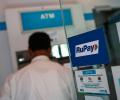
Credit card adoption is rapidly expanding beyond India's major metropolitan areas into Tier-II and Tier-III cities, driven by increasing incomes, digital awareness, and the integration of RuPay credit cards with UPI, according to a new report by SBI Card.

'We can integrate AI and tech into education, but that is just a means and not an end.' 'Ultimately, we need to control what happens in a classroom and we need to let teachers innovate their teaching style to suit the needs of Gen Z and beyond.'

15 states have rolled out unconditional cash transfer schemes for women, with an estimated annual outlay of around Rs 1.7 trillion covering nearly 120 million beneficiaries.

An innovation roadmap, a mechanism to double annual bilateral trade within next five years, and a joint artificial intelligence framework were among 13 outcomes to emerge from wide-ranging talks between Prime Minister Narendra Modi and President Emmanuel Macron on Sunday.

Reserve Bank Governor Sanjay Malhotra on Wednesday said there is no proposal to levy any charge on UPI transactions.

The videos were shown so that the woman could learn about Islam, she said in her statement, which is part of the chargesheet submitted in a Nashik court last week.

'...A new challenge has emerged in the form of Mythos.'

World Bank South Asia Chief Economist Franziska Ohnsorge advocates for the removal of obstacles hindering the adoption of artificial intelligence to foster business growth and job creation, particularly in South Asia.

Isn't there something significant in the UPI example for all of us to learn from and execute to enable world-scale success for our startups?, asks Ajit Balakrishnan.

The proposed solution is a one-hour delay for digital transactions exceeding Rs 10,000, particularly when the transfer is made to a new or unverified beneficiary. The idea is simple -- give users a window to reconsider, detect fraud or alert their bank before the funds are irretrievably transferred.

From April 1, 2026, the Reserve Bank of India's new authentication directions modernise how every digital payment you make must be verified -- and place the burden of security squarely on your bank, not on you.

Homegrown e-commerce giant Flipkart is experiencing a significant trend of senior leaders rejoining the company, driven by its people-first culture, opportunities for growth with ownership, and the chance to solve problems at an India scale.

Fino Payments Bank asserts its compliance with GST regulations following the arrest of its MD and CEO, Rishi Gupta, by the Directorate General of GST Intelligence (DGGI). The bank clarifies that the investigation pertains to program managers associated with multiple banks and not the bank's own GST compliance.

'We have seen that stablecoins lack the basic attributes of money, their advantages are neither unique nor unambiguous and their risks are all too real.'

Indian car buyers care more about affordability than technology, keeping ICE vehicles dominant while hybrids emerge as the preferred transition option and EVs struggle in the mass market.

The Reserve Bank on Wednesday announced the increase of the UPI Lite wallet limit to Rs 5,000 and per-transaction limit to Rs 1,000, in order to encourage wider adoption of the popular instant payment system through mobile phones. A limit of Rs 500 per transaction and an overall limit of Rs 2,000 per UPI Lite wallet, is presently applicable, with the facility of auto-replenishment. Unveiling the October bi-monthly monetary policy, Reserve Bank Governor Shaktikanta Das also said the per-transaction limit in UPI123Pay will be enhanced to Rs 10,000 from the current Rs 5,000.

The era where nations thrived through rigid alignments is giving way to an age where the connective State defines power. For India, that era has arrived, points out Dr Nishakant Ojha.

RBI cuts GDP growth projection to 6.6 per cent for current financial year, from earlier forecast of 7.2 per cent.

As deposit growth lags credit expansion, Indian banks face shrinking low-cost Casa inflows, rising funding costs, and structural shifts driven by UPI, e-Kuber, and digital savings trends, points out Tamal Bandyopadhyay.

The Reserve Bank of India (RBI) will launch the Unified Lending Interface (ULI) nationwide in due course, aiming to transform India's lending sector, similar to how the Unified Payments Interface (UPI) revolutionised the payments ecosystem, Governor Shaktikanta Das said on Monday.

'The real story of 2025 is that India officially stopped being a 'market of the future' and started acting as the world's primary economic engine.'
Recent RBI data indicates net addition of credit cards is running strong at 18 per cent year-on-year (Y-o-Y), but growth in credit card limits is ahead of loans outstanding. Growth in lower limit cards is decelerating fastest. The West and South have more usage and online transactions are more popular than offline, with metros leading growth.

Let's work flat out and create a policy framework that fosters the growth of Indian non-family business VC and private equity firms. This will allow our Indian startups' dreams to flourish, explains Ajit Balakrishnan.
